
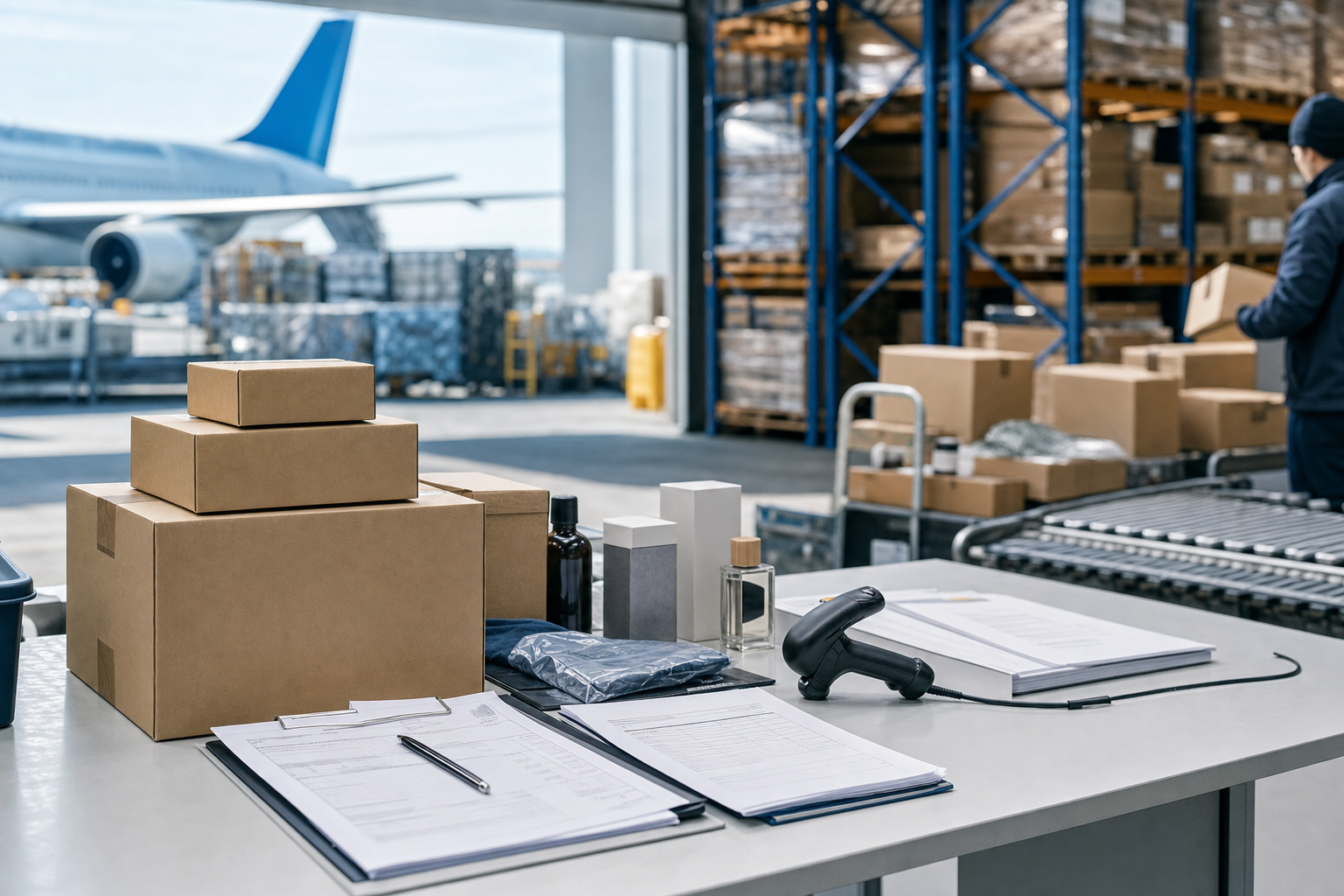
E-commerce shipments entering Canada are often described as “low value,” but that label covers several different customs rules. A parcel may qualify for simplified courier processing, qualify for duty or tax relief, or qualify for neither. Those decisions depend on the shipment’s value for duty, origin, destination, transport mode, goods and documentation.
The key operational distinction is between the Courier Low Value Shipment (CLVS) Program and the separate rules that provide limited relief for certain low-value shipments. CLVS is a clearance and accounting process. It is not a blanket exemption from duties and taxes, and it does not remove the importer’s responsibility for accurate descriptions, tariff classification, origin and value.
Three rules that are often confused
Low-value shipment relief
For shipments imported from countries other than the United States or Mexico, the Courier Imports Remission Order generally provides relief for qualifying courier shipments valued at no more than CAD 20. The relief is subject to exclusions and conditions. Goods such as certain tobacco, alcoholic beverages and restricted or regulated products should not be assumed to qualify simply because their declared value is low.
For eligible shipments from the United States or Mexico, the Canada-United States-Mexico Agreement provides higher thresholds for express shipments. The CBSA describes the treatment as no duties on shipments valued at no more than CAD 150 and no duties or taxes on shipments valued at no more than CAD 40, subject to the agreement’s conditions and exclusions. The thresholds are not a general rule for every shipment that happens to travel through the United States or Mexico: origin and the applicable shipping route matter.
A shipment from an Asian seller sent through a U.S. consolidation point, for example, does not automatically become a U.S.-origin shipment. The commercial invoice and origin information need to support the claim being made.
The CLVS ceiling
The CLVS Program is available for qualifying courier shipments with a value for duty not exceeding CAD 3,300. That ceiling is a processing threshold, not a duty-free threshold. A shipment under CAD 3,300 can still attract customs duty, GST, excise tax, surtax or other applicable charges.
CLVS is intended to allow participating courier companies and their customs service providers to use a streamlined release and accounting process for eligible low-value commercial shipments. Shipments that exceed the CLVS ceiling, or that fall within an excluded category, generally move through a different commercial import process.
Value for duty is not always the checkout price
Canadian customs value is determined under the valuation rules rather than by simply copying a website’s final payment amount. The price paid or payable is often the starting point, but items such as assists, certain commissions, packing costs, royalties or transportation charges can affect the calculation. The treatment of freight and insurance also depends on the valuation method and the point to which the value is determined.
For e-commerce operations, the practical requirement is to keep the product price, shipping charge, discounts, currency, seller identity and transaction data available in a form that can be matched to the import declaration. A vague description such as “online order,” “parts” or “gift” does not establish customs value or classification.
How a courier e-commerce shipment moves through clearance
- Order and seller data are created. The seller or marketplace generates the commercial information. The buyer’s name, Canadian delivery address, product description, quantity, price, currency and country of origin should be consistent across the order, invoice and transport record.
- The courier receives the shipment. The courier or its customs service provider reviews the shipment data and determines whether the shipment appears eligible for the applicable courier process. Missing information can cause a request for clarification before release.
- Customs data are submitted. The courier’s submission identifies the importer, goods, value, tariff treatment and any required permits or certificates. For commercial importers, the account and business information need to support the transaction.
- Release or examination occurs. The shipment may be released, referred for additional information, examined or held because of a prohibition, restriction, classification issue or valuation concern. A low value does not prevent an examination.
- Taxes, duties and service charges are settled. Government duties and taxes are separate from the courier’s brokerage, disbursement or handling charges. A buyer who sees one amount at delivery may need the courier’s statement to understand which portion was government revenue and which portion was a private service charge.
- The transaction is accounted for and retained. The importer, courier and customs service provider retain the records required for their respective roles. Commercial importers should be able to connect the shipment to the purchase order, payment record, inventory receipt and accounting entry.
The courier may handle the physical movement, customs data and collection of amounts from the recipient, but those functions do not necessarily make the courier the importer of record. The sale contract, shipping terms and customs documentation should make clear who is importing the goods and who is responsible for the information provided.
What CLVS changes—and what it does not
| Question | What CLVS can change | What remains the importer’s concern |
|---|---|---|
| Release process | Eligible shipments can use a streamlined courier process. | Goods may still be referred for review or examination. |
| Shipment value | CLVS eligibility uses the CAD 3,300 value-for-duty ceiling. | Being below the ceiling does not make the shipment duty- or tax-free. |
| Documentation | The courier may transmit and manage data in its approved process. | Descriptions, values, origin and classification still need to be accurate. |
| Import responsibility | The courier or broker may perform customs work on the importer’s behalf. | The importer can remain responsible for records, corrections and applicable charges. |
| Border treatment | Low-value courier shipments can move through an expedited channel when eligible. | Controlled, prohibited, regulated or incorrectly documented goods can be delayed. |
This distinction matters for retailers using courier fulfilment. A business may have hundreds of parcels below the CLVS ceiling while still having exposure from repeated misclassification, unsupported preferential-origin claims or incomplete records. Shipment-by-shipment convenience does not replace product-level customs controls.
Common failure modes in e-commerce imports
Using a sales description instead of a customs description
Marketing names often do not identify the material, function or degree of processing needed for tariff classification. “Kitchen accessory” could describe many different goods with different tariff treatment. A broker generally needs the product composition, principal use, dimensions or technical specifications, and sometimes photographs or product literature.
Treating the destination as the origin
A parcel bought from a Canadian-facing website may ship from a foreign warehouse. Conversely, a shipment routed through another country may retain its original country of origin. Origin affects tariff treatment and can also affect admissibility, marking and trade-remedy analysis.
Splitting one order without understanding the customs effect
Multiple parcels can create separate transport documents and separate release events, but splitting an order does not necessarily change the underlying value, origin or classification analysis. Repeated low-value shipments may also make it harder to reconcile inventory and landed cost.
Assuming “gift” avoids commercial requirements
A genuine gift may receive different treatment under a specific remission provision, but a sale sent directly to a consumer is not converted into a gift by changing the invoice description. Misdescribing commercial goods can lead to reassessment, delays or compliance concerns.
Ignoring regulated goods
Food, cosmetics, health products, plants, animal products, batteries, firearms, textiles and other regulated goods can require information or approvals beyond ordinary courier clearance. A low declared value does not remove those requirements. Importers who sell these products into Canada should identify the applicable regulator and documentation before listing the product for sale.
Failing to reconcile courier statements
Courier statements can contain customs duties, GST or other taxes, brokerage charges, advances and ancillary fees. If those amounts are posted as one undifferentiated landed-cost figure, errors become difficult to identify. A useful control is to reconcile the courier invoice to the customs transaction, the supplier order and the warehouse receipt.
What a customs broker does for a high-volume importer
A broker’s work is most useful before parcels reach the border. The broker can review the product catalogue, build a classification file, assess origin claims, confirm the intended importer structure and establish the data fields that must travel with each order. This is different from manually correcting a parcel after it has already been held.
- Product review: map product families to tariff classifications and identify products needing technical evidence.
- Threshold review: separate the CAD 20 remission rule, CUSMA express-shipment thresholds and the CLVS CAD 3,300 processing ceiling.
- Data controls: compare marketplace, seller, warehouse and courier fields so the same product does not appear under inconsistent descriptions or values.
- Exception handling: define what happens when a shipment exceeds the threshold, lacks an origin statement, contains regulated goods or receives a customs information request.
- Post-entry review: reconcile courier entries and correct recurring errors instead of treating each parcel as an isolated event.
For importers receiving frequent parcels into Toronto, Mississauga or Brampton fulfilment locations, the physical route may involve Pearson or a courier hub before delivery to a warehouse. That transport path does not replace the customs analysis. A local warehouse can improve receiving and reconciliation, but it does not make an otherwise ineligible shipment a CLVS shipment.
A practical control checklist
Before scaling a Canadian e-commerce programme, an importer can ask:
- Who is the importer of record for each sales channel?
- Does the system retain the seller, buyer, product, quantity, currency, price and country-of-origin data?
- Are value-for-duty and shipping data being supplied consistently?
- Which products fall below the CAD 20 remission threshold, within the CUSMA express thresholds, or within the CLVS ceiling?
- Which products are excluded, controlled or likely to require permits?
- How are courier duties, taxes and private brokerage charges separated in the accounts?
- How will the business correct a product classification or value after repeated shipments have already been released?
The safest operating model treats low-value clearance as a data and product-control problem, not simply as a faster parcel service. CLVS can reduce friction for eligible courier shipments, but the importer still needs a defensible customs file behind the order data.