
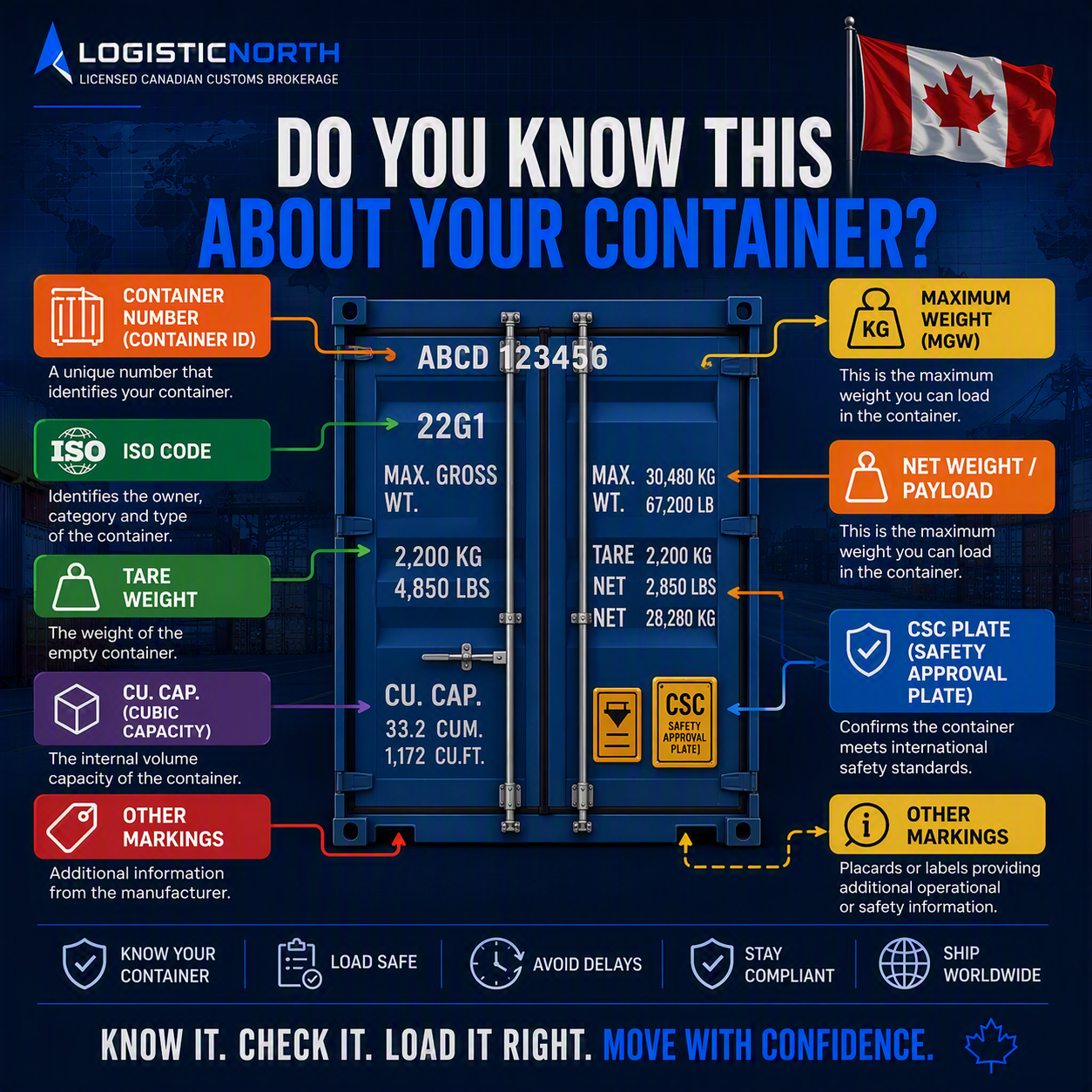
Do You Know What's Written on Your Shipping Container? Understanding Container Markings Explained
Every shipping container carries critical information printed directly on its doors. While many importers, exporters, and logistics professionals see these markings every day, few fully understand what each one means and why it matters.
Knowing how to read container markings can help businesses ensure compliance, improve cargo planning, avoid delays, and maintain safe shipping practices.
Let's break down the key markings found on an international shipping container and why they are important for global trade.
Why Container Markings Matter
Shipping containers move through ports, terminals, rail yards, distribution centers, and border crossings worldwide. The markings displayed on a container provide essential information to:
Customs authorities
Shipping lines
Freight forwarders
Port operators
Warehouse teams
Trucking companies
Cargo owners
These identifiers help ensure containers are handled safely, loaded correctly, and transported efficiently throughout the supply chain.
1. Container Number (Container ID)
The container number acts as the container's unique identification code.
Example:
ABCD 123456
This number allows shipping companies and customs authorities to:
Track container movements
Verify ownership
Monitor shipment status
Manage inventory
Identify cargo during transit
Think of it as a license plate for a shipping container.
Why It Matters
Without an accurate container number, tracking and tracing cargo becomes difficult, leading to delays and operational issues.
2. ISO Code
Every shipping container is assigned an ISO code.
Example:
22G1
The ISO code identifies:
Container type
Container dimensions
Design characteristics
Intended cargo classification
This standardized coding system ensures consistency throughout the global shipping industry.
Why It Matters
The ISO code helps logistics providers select the correct equipment, allocate storage space, and avoid loading errors.
3. Tare Weight
Tare weight refers to the weight of the empty container without cargo.
Example:
2,200 KG
The tare weight includes:
Container structure
Doors
Floor
Container fittings
Why It Matters
Knowing the tare weight helps calculate:
Total shipment weight
Vehicle load limits
Vessel loading plans
Regulatory compliance
Accurate weight calculations are essential for safe transportation.
4. Maximum Gross Weight (MGW)
Maximum Gross Weight represents the maximum total weight the container can legally carry.
Example:
30,480 KG
This includes:
Container weight
Cargo weight
Packaging materials
Dunnage and securing materials
Why It Matters
Exceeding the maximum gross weight can result in:
Cargo delays
Regulatory penalties
Equipment damage
Safety risks
Rejected shipments
Understanding MGW helps ensure safe and compliant transportation.
5. Net Weight / Payload
Net weight, often referred to as payload capacity, indicates the maximum cargo weight that can be loaded into the container.
Example:
28,280 KG
This figure is calculated by subtracting the tare weight from the maximum gross weight.
Why It Matters
Payload information helps:
Plan cargo loading
Maximize container utilization
Prevent overloading
Ensure transportation compliance
Efficient weight management can reduce shipping costs and improve operational efficiency.
6. Cubic Capacity (CU. CAP.)
Cubic Capacity refers to the internal volume available inside the container.
Example:
33.2 CUM / 1,172 CU.FT
This measurement indicates how much cargo can physically fit inside the container.
Why It Matters
Many shipments "cube out" before they "weigh out."
Understanding cubic capacity helps businesses:
Optimize packing
Reduce wasted space
Improve freight efficiency
Select the correct container size
7. CSC Plate (Safety Approval Plate)
The CSC Plate is one of the most important safety markings on a container.
CSC stands for:
Convention for Safe Containers
The plate confirms the container meets internationally recognized safety standards.
Information typically includes:
Container approval details
Manufacturing information
Inspection records
Maximum allowable loads
Why It Matters
Many ports and shipping lines will not accept containers that do not meet CSC requirements.
A valid CSC certification helps ensure global compliance and cargo safety.
8. Other Markings and Labels
Containers may also display additional markings such as:
Hazardous goods placards
Owner information
Handling instructions
Certification labels
Maintenance markings
Safety notices
These markings provide operational and regulatory guidance throughout the shipping process.
Why It Matters
Additional labels help supply chain partners manage specialized cargo safely and efficiently.
The Canadian Trade Perspective
For Canadian importers and exporters, understanding container markings is especially important when moving cargo through:
Canadian ports
Cross-border shipments
International trade corridors
Customs clearance procedures
Accurate container information supports smoother interactions with logistics providers and customs authorities while helping businesses maintain compliance throughout the shipping journey.
Best Practices Before Shipping
Before your container leaves the facility, verify:
✅ Container number matches shipping documents
✅ ISO code corresponds to the correct container type
✅ Gross weight does not exceed allowable limits
✅ Payload calculations are accurate
✅ CSC Plate is visible and valid
✅ Additional markings are readable and compliant
✅ Documentation reflects actual cargo details
Final Thoughts
A shipping container is more than a metal box. Every marking displayed on its doors serves an important purpose in global trade. Understanding container numbers, ISO codes, weight limits, cubic capacity, and safety certifications can help businesses operate more efficiently while avoiding costly delays and compliance issues.
At LogisticNorth, we help Canadian importers and exporters navigate customs requirements, trade compliance, and international logistics with confidence.