
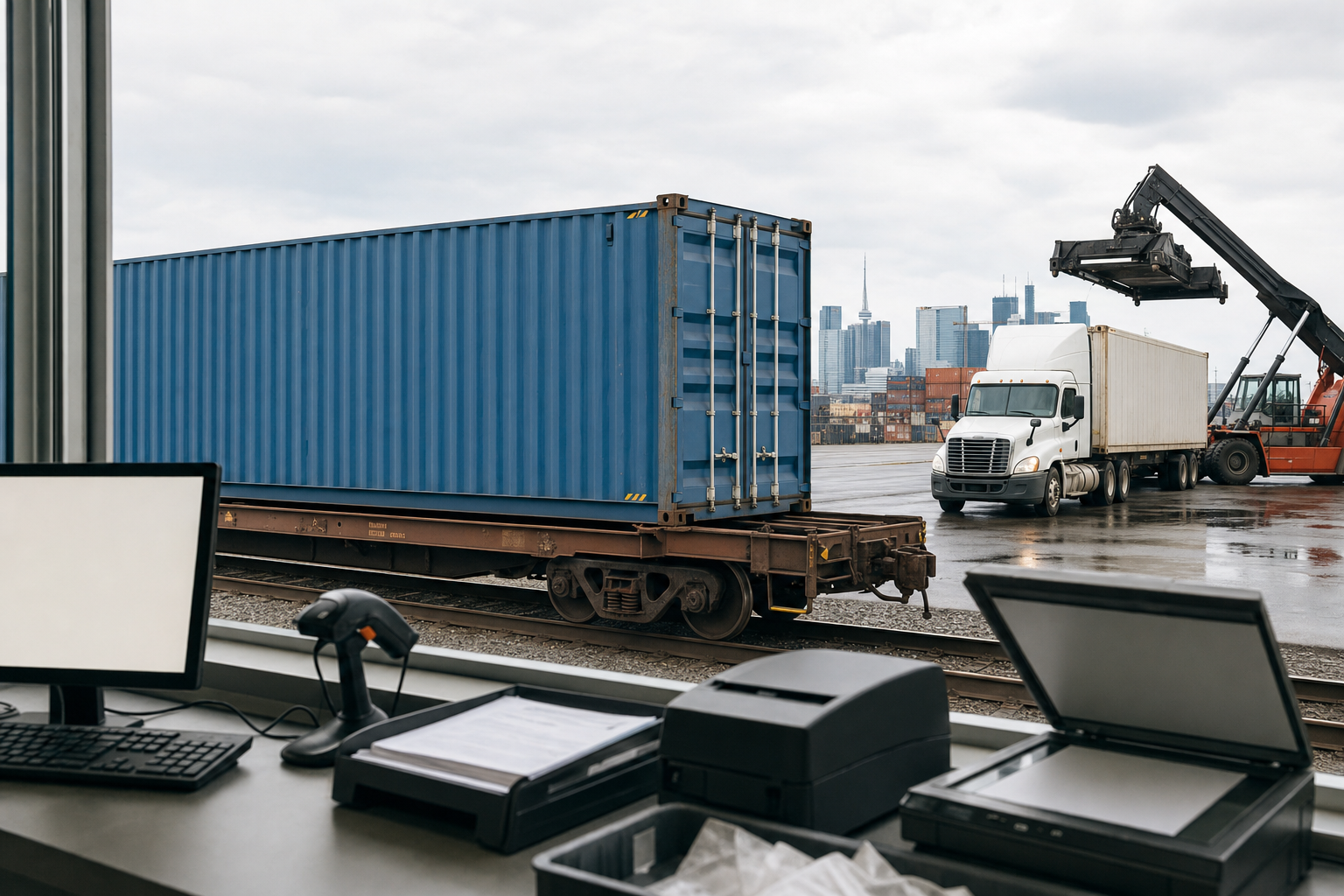
Two CBSA updates issued between October 30 and November 2, 2026 point to a different kind of freight-disruption risk for Ontario importers: cargo can be delayed by incorrect container reporting, while duty costs can be misstated when steel-derivative surtax relief is not claimed through the appropriate process. Neither development is a reported port closure or border shutdown, but both can affect shipments moving through GTA freight networks.
What changed between October 30 and November 2
On October 30, CBSA issued Customs Notice 26-25, clarifying that cargo containers must be reported separately and accurately through the ACI/eManifest system. The notice covers loaded and empty containers, containers moving by marine, highway and rail, containers imported into Canada for sale, and consolidated shipments. The notice is available at Customs Notice 26-25.
On November 2, CBSA updated Customs Notice 26-07 to reflect amendments to the Steel Derivative Goods Surtax Remission Order. The update concerns relief from the 25% steel-derivative surtax for additional listed products and certain company-specific or circumstance-specific goods. The operational update is available at Customs Notice 26-07.
The legal amendment behind the remission update was registered and came into force on October 23, 2026. The amendment is published in the Canada Gazette. That distinction matters: the November 2 development is an implementation and claim-management update, not a newly effective surtax created on that date.
How container-reporting errors can interrupt a shipment
For highway and rail movements, loaded-container information is to be included in the ACI cargo transmission. Empty containers require an empty-container transmission. A container imported for sale requires its own ACI cargo transmission and customs accounting.
These categories should not be treated as interchangeable in a transportation file. An Ontario importer receiving freight into Brampton, Toronto or Mississauga may have several parties handling the data: the carrier, a freight forwarder, a consolidator and the customs broker. If the container number or container status is wrong at one handoff, the cargo record may not align with the movement being presented.
Consolidated shipments require particular attention. Where an imported container contains consolidated freight, the freight forwarder is responsible for submitting separate House Bill information for the imported container. Importers generally benefit from confirming that the container reference on commercial and transport documents matches the reference transmitted by the carrier or forwarder.
The practical exposure is not limited to a documentation correction. The CBSA notice states that non-compliance may result in AMPS penalties. In a live shipment, an incorrect or incomplete cargo report can also create cargo-reporting problems and delays, even when the underlying merchandise invoice and tariff classification are correct.
A useful pre-arrival control
- Identify whether the equipment is loaded, empty or being imported for sale.
- Confirm that the container number is consistent across the carrier, forwarder and broker records.
- For consolidated cargo, verify that the House Bill information has been provided separately as required.
- Keep evidence of corrections and transmission details with the shipment file.
Why the steel-derivative update is a separate freight risk
The steel-derivative change affects the accounting side of the shipment rather than the physical movement of the container. The amended remission framework covers 204 additional products generally available to importers, additional products receiving time-limited remission, and 47 products eligible for remission for specified companies or circumstances.
Relief is not automatic. Eligible importers generally need to claim it and retain supporting records. CBSA identifies special authorization codes for claims made through the Commercial Accounting Declaration and CARM process. Depending on the circumstances, an importer may also need to pursue a refund or adjustment claim and maintain records supporting tariff classification, eligibility and end use.
For GTA manufacturers, distributors and industrial-equipment importers, the control point is therefore the product-level review before accounting—not a blanket assumption that every steel-related shipment qualifies. The amended schedules should be checked against the actual tariff classification and any company, end-use or contractual condition stated in the applicable remission provision.
What Ontario importers should separate in their workflow
These two updates should be managed as different workstreams. Container reporting belongs in the transportation and pre-arrival data process. Steel-derivative remission belongs in tariff classification, accounting and post-accounting review.
| Risk area | Primary file owner | Key check |
|---|---|---|
| Container transmission | Carrier, forwarder and broker | Container status, number and House Bill data match the movement |
| Steel-derivative remission | Importer and customs accounting team | Product eligibility, authorization code and supporting records are documented |
| Correction or recovery | Importer and broker | Any correction, refund or adjustment is linked to the relevant shipment and accounting record |
For freight moving into Peel Region warehouses or GTA distribution facilities, separating these controls can help prevent a duty-review issue from being confused with a cargo-reporting issue. The available notices describe administrative requirements and remission procedures; they do not establish a general suspension of freight processing in Ontario.
Bottom line for current shipments
Importers with containers already moving by highway or rail should first validate the cargo-reporting status and container references with their carrier or forwarder. Importers of listed steel-derivative products should separately review whether the shipment qualifies for remission and whether the claim will be supported in the CARM accounting record.
The immediate operational lesson is narrow but important: accurate transport data protects the movement, while a documented remission claim protects the duty treatment. Treating either one as an automatic system outcome creates avoidable exposure.