
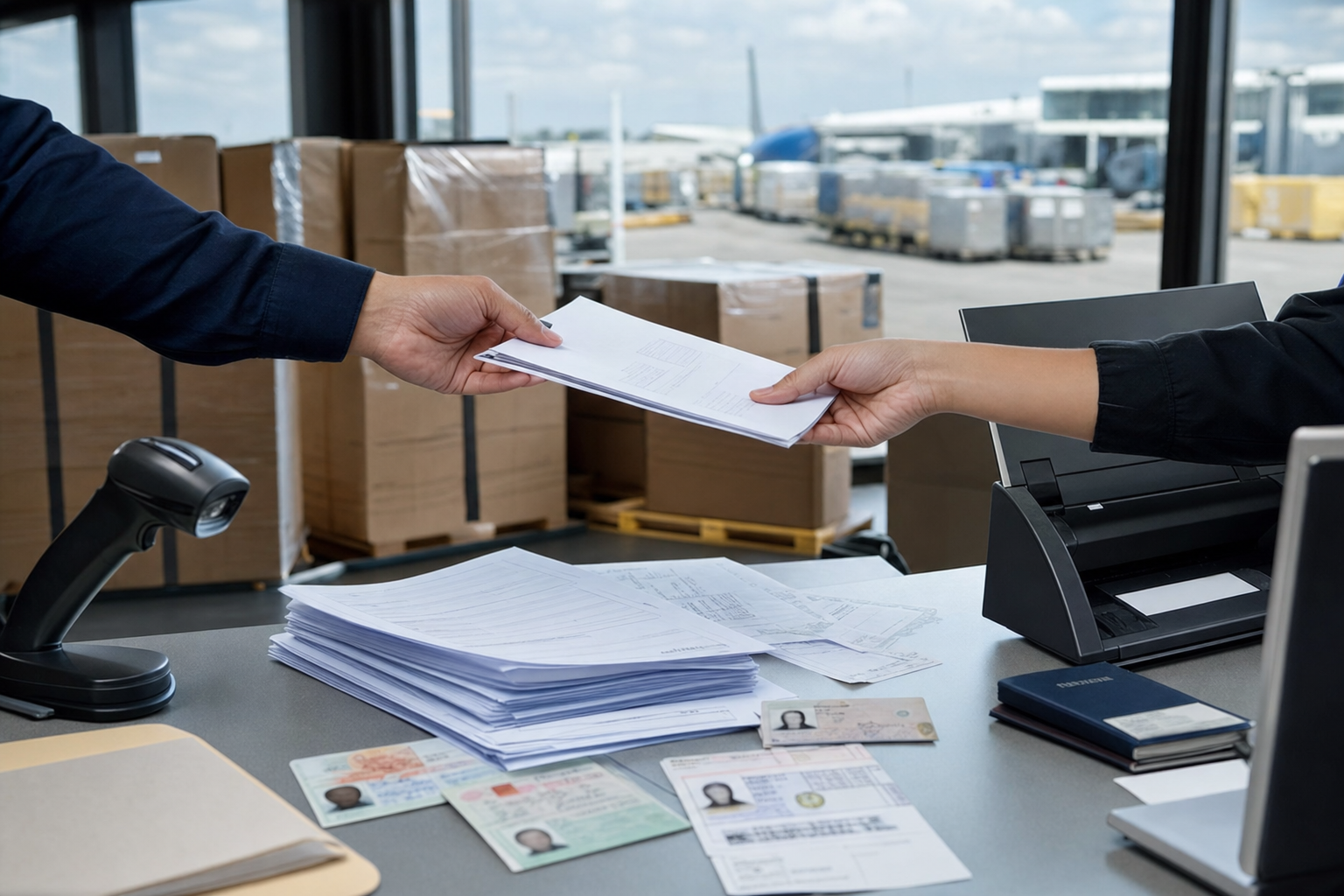
Recent Canada Border Services Agency operations at Mirabel Airport resulted in criminal charges connected with cross-border networks trafficking counterfeit and false identity documents. For importers, the practical lesson is not that every shipment is suspected of fraud. It is that customs fraud investigations often begin with inconsistencies across several ordinary records: the importer identity, commercial invoice, routing, declared goods, payment trail and supporting documents.
Importers in Toronto, Mississauga and Brampton may encounter the same control issue even when their cargo is not moving through Mirabel. Goods can be routed through different Canadian airports, transferred to a GTA warehouse or delivered by truck after an air-cargo movement. A broker can prepare and transmit customs information, but the broker cannot replace the importer’s responsibility to know the supplier, the goods and the commercial transaction.
What the Mirabel investigations signal
Public CBSA enforcement reporting describes investigations involving counterfeit goods and false identity documents, with criminal charges laid against individuals connected to the alleged activity. A charge is an allegation to be determined through the court process; it is not a finding that every shipment associated with a person, address or product category is fraudulent.
The operational signal is broader than the specific airport. Cross-border fraud networks can use legitimate transportation channels, commercial-looking paperwork and real businesses as part of a larger scheme. A shipment may therefore appear normal when one document is reviewed in isolation but become higher risk when the complete transaction is examined.
For a customs broker, this changes the quality of the intake review. The question is not only whether an invoice contains the information needed to account for goods. It is also whether the parties, transaction and cargo make sense together.
Where document fraud can enter an ordinary shipment
Importer identity
Importers who use a broker generally provide legal business information, account details and authority for the broker to act. Risk can arise when a person presents themselves as an employee or representative without clear authority, when a newly created business has no apparent connection to the goods, or when instructions come from a personal account rather than an established business contact.
A change in consignee, importer of record, delivery address or payment instructions should be treated as a transaction change requiring verification—not as a routine correction to the paperwork. A broker may ask the established client contact to confirm the change through a known channel and may pause the entry review until the commercial basis is clear.
Commercial invoices and packing lists
False documents are not limited to forged identity cards. Commercial records can be altered to obscure the seller, buyer, quantity, value, description or origin of goods. A vague description such as “parts,” “accessories” or “samples” may prevent proper tariff classification and can conceal a mismatch between the declared goods and the actual shipment.
Importers who cannot reconcile the invoice with the purchase order, packing list, transport document and receiving records may face questions about the transaction even if the goods themselves are legitimate. A broker can identify missing or contradictory information, but should not rewrite the commercial facts to make the file appear consistent.
Identity documents and supporting records
Where a transaction involves identity documents, licences, certificates or other records, the document should be relevant to the goods and the parties involved. A document that looks official is not necessarily evidence that the underlying person, business or authorization is genuine.
Importers should avoid sending altered scans, cropped documents or unexplained replacement versions. If a document was corrected, the file should preserve the original business record and explain who corrected it, why it was corrected and how the corrected information was verified.
A practical pre-clearance control sequence
A proportionate control does not require every importer to conduct an investigation before every entry. It does require a repeatable process for shipments that contain unusual features or arrive with changed instructions.
- Identify the parties. Confirm the seller, buyer, consignee, importer, carrier, broker contact and delivery party. The names and addresses should be commercially plausible and consistent across the file.
- Confirm the transaction. Match the invoice to the purchase order, sales contract or other buying record. Check that the quantity, unit price, currency and payment terms are understood.
- Describe the goods accurately. Use the product’s ordinary commercial description, model or part information where relevant, and explain what the goods are made of and what they do. Do not accept a generic description merely because it is convenient.
- Check the route. Compare the origin, export location, airport, carrier, consignee and final delivery point. A complex route is not proof of fraud, but an unexplained change in route should be documented.
- Compare the records. Review the commercial invoice, packing list, air waybill or other transport record, purchase documentation and any permits or certificates needed for the goods. Investigate contradictions before requesting release.
- Record the decision. Keep the explanation for any correction, escalation, document replacement or client confirmation. A short, dated record is more useful than relying on someone’s memory later.
Red flags and the appropriate response
| Observed issue | Why it matters | Practical response |
|---|---|---|
| Last-minute change to importer, consignee or delivery address | The change may affect who is responsible for the transaction or where the goods are going. | Verify the request with an established contact and obtain the commercial reason before updating the entry file. |
| Invoice description does not match product information or packaging | The declared goods may not support classification, valuation or admissibility review. | Request a complete description and reconcile it with the purchase and transport records. |
| Documents contain different names, addresses, quantities or currencies | Inconsistency can indicate an administrative error or an attempt to conceal the transaction. | Identify the source record, correct the file transparently and preserve the explanation. |
| Unexplained urgency to release cargo | Pressure can discourage normal verification and review. | Follow the established intake process; urgency does not replace evidence. |
| Commercial records arrive only as altered scans or screenshots | The provenance and completeness of the records may be difficult to establish. | Request the underlying business record or confirmation from the responsible party. |
None of these indicators proves criminal conduct. They indicate that the file needs clarification before the broker relies on it. A sound process distinguishes an innocent clerical mistake from a pattern of evasive or contradictory answers.
What a broker can do—and what a broker cannot do
Broker actions
A broker can compare documents, ask targeted questions, identify missing information, review the proposed tariff classification and valuation basis, and explain what evidence is needed to support the entry. The broker can also place the file on hold internally, decline to transmit incomplete information and escalate suspected fraud through appropriate internal and legal channels.
If a shipment has already been presented or released, a broker can help the importer assess whether a correction, disclosure, record preservation or other response should be considered. The correct action depends on the facts, the records and the applicable law. It should not be based on an attempt to make the file less conspicuous.
Limits of the broker’s role
A broker does not have police powers, does not authenticate every identity document as a forensic examiner and cannot guarantee that a supplier or document is genuine. The importer remains the party closest to the commercial transaction and is generally expected to provide accurate information and retain supporting records.
A broker also should not change the importer, value, origin, description or other material information simply because the original information may attract questions. If the commercial facts are uncertain, the appropriate response is to obtain evidence or pause the file—not to select a more convenient answer.
Implications for GTA importers using air and truck networks
Businesses in Mississauga, Toronto and Brampton often coordinate air cargo, third-party logistics providers and warehouse delivery across the GTA. A shipment routed through Mirabel or another Canadian gateway may then move by truck to a Peel Region facility or a customer distribution point. That handoff creates several opportunities for information to become disconnected.
The receiving warehouse may see a pallet count that does not match the packing list. The purchasing team may have a supplier invoice that differs from the copy sent to the broker. A transportation provider may receive a revised delivery instruction that the importer has not approved. These are operational controls, not merely customs paperwork.
Importers can reduce the risk by assigning one accountable owner for shipment data, restricting who may authorize changes, matching warehouse receipts to the entry file and retaining the original versions of records. Where a broker is involved, the importer should provide one controlled document package rather than sending informal substitutions to several parties.
When to stop and escalate
A shipment should receive additional review when the importer cannot explain who bought the goods, who supplied them, why the routing changed, why the value differs from the purchase record or why a document was replaced. Escalation is also appropriate where a client or intermediary asks for a declaration that does not reflect the commercial facts.
The immediate objective is to preserve records and prevent unsupported information from being transmitted. Depending on the circumstances, the importer may need legal advice, internal fraud review or advice from the relevant regulatory authority. A customs broker can help separate an entry-data problem from a broader transaction-integrity problem, but should not give a conclusion about criminal liability.
Bottom line
The Mirabel Airport investigations are a reminder that customs fraud controls extend beyond spotting counterfeit products. False identity documents, inconsistent commercial records and unexplained changes in shipment instructions can undermine the reliability of an entire entry file.
Importers that connect party verification, transaction records, cargo descriptions, routing and warehouse receipt information are better positioned to identify problems before release is requested. The broker’s role is to test the information supplied, ask for support where it does not align and avoid transmitting facts that cannot be substantiated.