
Export Customs Clearance: The Essential Process Before Your Cargo Leaves Canada
Exporting goods from Canada involves more than simply loading products onto a truck, ship, or aircraft. Before any shipment can legally leave the country, it must go through a customs clearance process designed to ensure compliance with Canadian export regulations.
Whether you are a first-time exporter or an established business expanding into international markets, understanding the export customs clearance process can help you avoid delays, penalties, and unnecessary disruptions.
What Is Export Customs Clearance?
Export customs clearance is the process of verifying, documenting, and authorizing goods before they leave Canada for international destinations. Canadian customs authorities review export information to ensure shipments comply with applicable trade laws, reporting requirements, and product-specific regulations.
A successful customs clearance process helps ensure your cargo moves efficiently across borders while reducing compliance risks.
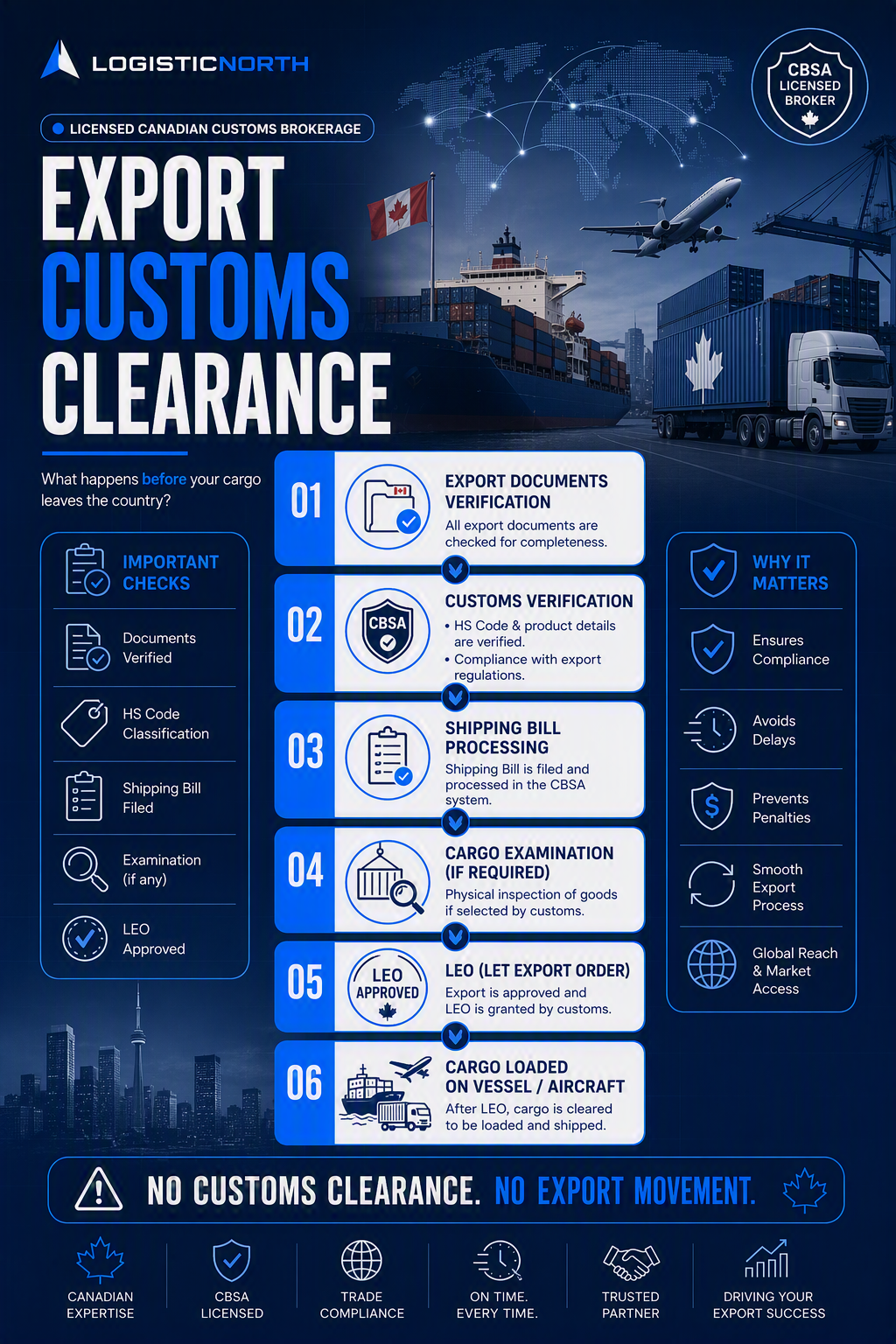
Step 1: Export Documents Verification
The first step is reviewing all export documentation to ensure accuracy and completeness.
Documents may include:
Commercial Invoice
Packing List
Export Permits (if required)
Certificates of Origin
Shipping Instructions
Purchase Orders
Incomplete or inaccurate documentation is one of the most common reasons for customs delays. Careful verification at this stage helps prevent issues later in the export process.
Step 2: Customs Verification
Once documents are prepared, customs-related information is verified.
This includes:
HS Code classification
Product descriptions
Declared values
Country of destination
Regulatory requirements
Accurate product classification is critical because it determines how goods are treated under international trade regulations and reporting requirements.
Step 3: Shipping Bill Processing
The export declaration is submitted through the appropriate customs reporting system.
During this stage:
Shipment details are filed
Export information is reviewed
Required declarations are submitted
Government reporting obligations are satisfied
Proper filing ensures that shipment records are available to customs authorities and that exporters remain compliant with Canadian export regulations.
Step 4: Cargo Examination (If Required)
Not all shipments are physically inspected, but customs authorities may select specific cargo for examination.
An inspection may be requested to:
Verify cargo contents
Confirm documentation accuracy
Review compliance requirements
Ensure export restrictions are being followed
Although inspections can add time to the process, they are a standard part of maintaining trade security and regulatory compliance.
Step 5: Let Export Order (LEO)
After all requirements have been satisfied, customs authorities issue a Let Export Order (LEO).
The LEO confirms that:
The shipment has met regulatory requirements
Export documentation is accepted
Customs clearance has been completed
The cargo is authorized to proceed for export
This is one of the most important milestones in the export journey.
Step 6: Cargo Loading and Shipment
Once export authorization is granted, cargo can be loaded onto the selected mode of transportation, including:
Container vessels
Cargo aircraft
Rail systems
Commercial transport trucks
At this stage, the shipment officially begins its international journey to the destination market.
Why Export Customs Clearance Matters
A well-managed export clearance process delivers several important benefits:
Ensures Regulatory Compliance
Meeting Canadian export requirements helps businesses operate confidently in global markets.
Reduces Delays
Accurate documentation and timely filing reduce the likelihood of border-related disruptions.
Prevents Penalties
Compliance failures can result in costly fines, shipment holds, and reputational damage.
Supports Business Growth
Efficient exports allow organizations to serve customers internationally and expand market reach.
Improves Supply Chain Reliability
A streamlined customs process helps maintain predictable delivery schedules and stronger customer relationships.
Key Export Compliance Checklist
Before shipping internationally, make sure:
✅ Export documents are complete and accurate
✅ HS Codes are properly classified
✅ Shipping declarations are filed correctly
✅ Regulatory requirements have been reviewed
✅ Any required inspections are completed
✅ Export authorization has been obtained
Final Thoughts
Successful exporting begins long before cargo reaches a port, airport, or border crossing. A structured customs clearance process ensures that goods move legally, efficiently, and without unnecessary complications.
By verifying documentation, maintaining regulatory compliance, and working with experienced customs professionals, Canadian exporters can reduce risk, accelerate shipments, and confidently access global markets.
No Customs Clearance. No Export Movement.
At LogisticNorth, our licensed customs brokerage experts help businesses navigate export requirements efficiently, ensuring shipments remain compliant and move smoothly across international borders.