
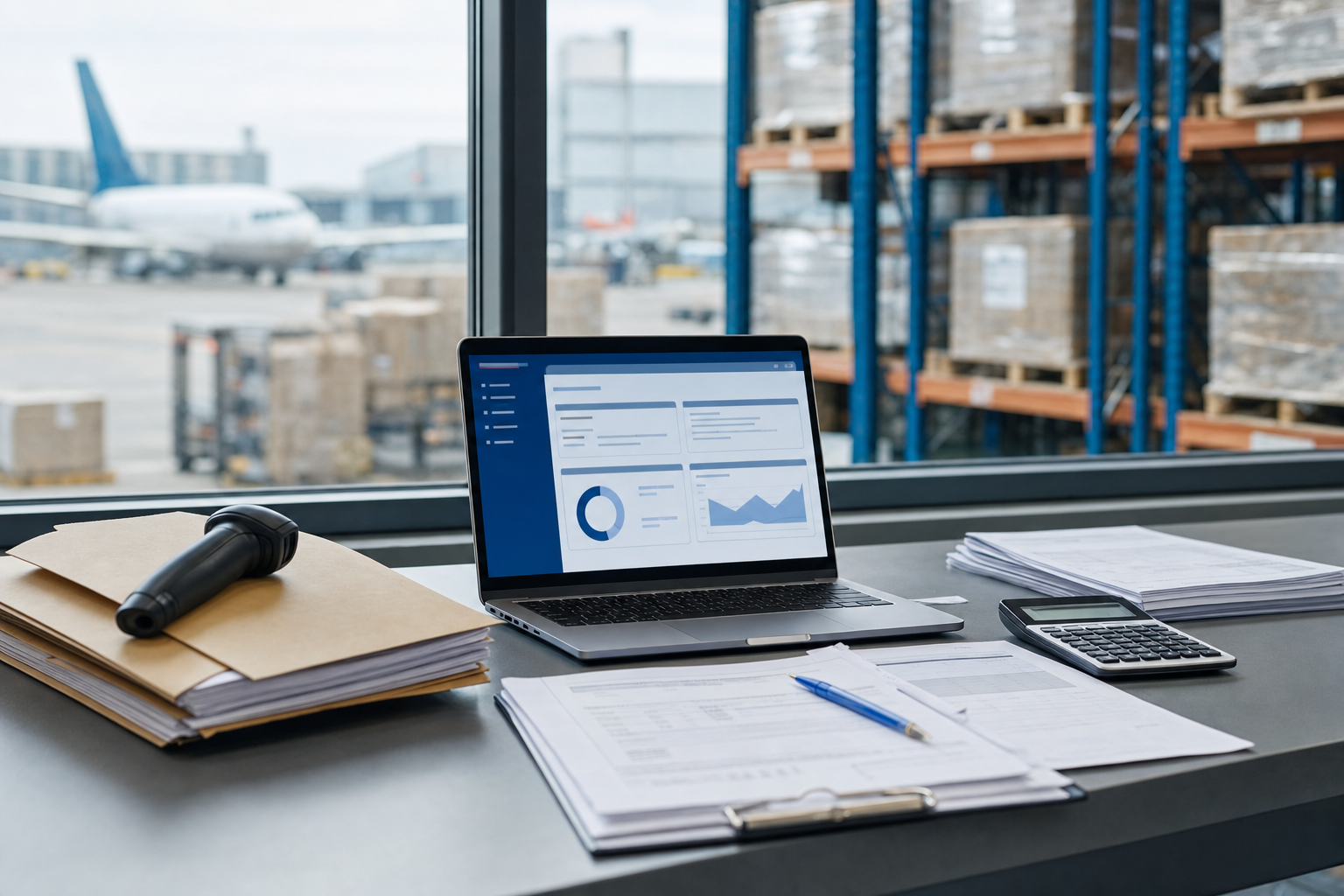
The CARM Client Portal changes who controls the accounting workflow for commercial imports. A customs broker may still prepare and transmit accounting information as an importer’s agent, but the importer’s business account is the point at which duties, taxes, statements, payment arrangements and financial authority are managed.
That distinction matters in Brampton, Toronto and Mississauga operations where purchasing, customs, accounts payable and warehouse teams may handle different parts of the same shipment. The practical question is no longer only whether a broker filed the entry. It is whether the importer has an operating process for reviewing the customs account, authorizing the broker’s access and paying amounts that appear on the importer’s statement.
What changed in the importer’s role
CARM is the Canada Border Services Agency’s system for commercial accounting and revenue management. The Client Portal gives an importing business access to its own commercial account information and online customs processes. A broker can act for the importer, but the broker’s system and the importer’s CARM account are not the same thing.
For an importer, the change is best understood as a division of responsibility:
| Activity | Importer’s role | Broker’s possible role |
|---|---|---|
| Business account access | Maintain the business relationship and authorize appropriate users | Use delegated access when authorized |
| Import declaration | Provide complete and accurate commercial information | Classify, prepare and transmit information as the importer’s agent |
| Duties and taxes | Remain responsible for amounts arising from the declaration and account | Calculate or review amounts based on the information supplied and transmit the entry |
| Statement and payment | Review amounts, arrange payment and manage internal approval | Explain entry details and help identify filing or transmission issues |
| Corrections and adjustments | Decide whether the underlying data is correct and retain support | Prepare or submit an adjustment when authorized and technically appropriate |
This does not mean an importer has to perform every customs task internally. It means the importer generally cannot treat the broker’s filing activity as a replacement for account ownership, financial review or source-document control.
The accounting workflow from shipment to statement
1. Establish the account and user structure
An importer generally needs a properly established business account in the Client Portal before its staff can manage the account’s customs functions. The organization should identify a small group of accountable administrators and then assign operational access according to job responsibilities.
Access should be designed around duties, not convenience. A customs manager may need to review transactions and broker delegations. An accounts-payable user may need statement and payment visibility. A finance administrator may manage financial security or account settings. A warehouse employee who only confirms receipt may not need access to customs accounting information.
Importers with multiple legal entities should also confirm which business number and import-export program account relate to each importing entity. A shared finance team in Mississauga may pay invoices for several companies, but that does not automatically mean each company’s customs account should be administered by the same users.
2. Give the broker the right delegation
A broker generally needs authority to act for the importer within the portal and in the customs transaction. The importer should treat that authority as a controlled business relationship rather than as a one-time setup task.
Before delegating access, the importer should document:
- which legal entity is appointing the broker;
- which customs activities the broker is expected to perform;
- which internal contact approves classifications, valuation information and origin data;
- how the relationship will be reviewed when a broker, employee or business entity changes; and
- who can remove or amend access.
The broker can generally prepare and transmit accounting information using the commercial documents and instructions supplied by the importer. The delegation does not transfer ownership of the goods, commercial facts or legal responsibility for the declaration.
3. Supply the information that drives the calculation
Duties and taxes are calculated from the facts of the import transaction. Depending on the goods and circumstances, relevant facts can include tariff classification, origin, tariff treatment, customs value, currency, quantity, assists, transportation charges and applicable permits or trade remedies.
The importer is usually the party best placed to know the commercial facts. A broker can identify inconsistencies, request clarification and apply customs rules to the information provided, but cannot reliably infer every fact from an invoice.
A useful handoff package generally includes the commercial invoice, packing information, transport details, purchase or sale terms, origin evidence and any product-specific information needed for classification or special measures. If the price, seller, buyer, shipment terms or product composition changes, the importer’s process should route that change to the customs review queue instead of assuming the old entry pattern still applies.
4. Review the account after transmission
After entries are accounted for, the importer should review the customs information and the resulting financial records through the systems used by its business. The CARM account provides the importer with visibility into its customs relationship; the broker’s transaction report may provide more operational detail. Neither view should automatically be treated as the complete accounting record without a defined comparison process.
The review should focus on exceptions rather than require finance staff to reread every shipment manually. Examples include an unexpected tariff treatment, an unusual duty or tax amount, a missing entry, a duplicate transaction, a transaction assigned to the wrong legal entity, or an entry that does not match the importer’s purchase and receiving records.
5. Manage the statement and payment cycle
The importer generally remains responsible for reviewing amounts posted to its customs account and ensuring that payment is made through an accepted method by the applicable deadline. A broker may remind the importer about upcoming amounts or provide a transaction report, but the importer should not assume that a broker’s invoice is the same as the importer’s official customs statement.
This is an important operating distinction. The broker’s invoice may contain service charges, disbursements or a grouping of entries. The customs statement concerns amounts recorded against the importer’s account. Accounts payable should know which document authorizes payment of customs amounts, which document supports the broker’s service charge and which internal approval confirms that the goods were received by the correct entity.
What the broker does—and what remains with the importer
A broker’s work can include tariff classification support, entry preparation, electronic transmission, release coordination, document review and assistance with corrections. The exact scope depends on the service agreement and the information supplied by the importer.
The importer generally retains responsibility for the facts behind the transaction. That includes ensuring that product descriptions are sufficiently specific, origin information is supported, valuation instructions are complete and any changes to the supply chain reach the customs team. The importer also generally remains responsible for preserving records that support the accounting and for responding when a customs authority requests information.
The most reliable division of work is therefore not “the broker handles customs and finance handles payment.” It is a controlled handoff:
- the business provides accurate commercial and product information;
- the broker applies the agreed customs process and transmits the declaration;
- the importer reviews the resulting transaction and statement information;
- finance arranges payment and posts the cost to the correct entity and period; and
- the importer and broker resolve exceptions or corrections with supporting records.
Common failure modes after portal adoption
The broker is registered, but no importer owns the account
An importer may give a broker access and assume the setup is complete. That leaves no clear internal owner for user access, statements, payment settings or changes to the legal entity. The remedy is to name an importer-side account owner and a backup, then record the responsibilities in the customs procedure.
Portal access is confused with authority to approve data
A user who can view or manage a portal function may not be the person authorized to approve classification, valuation or origin information. Access rights and commercial approval rights should be documented separately. This is particularly important where a Toronto finance team, a Brampton distribution centre and a Mississauga customs team share the same importing account.
Statements are compared only with broker invoices
A broker invoice can be useful, but it may not show the same grouping, timing or account-level information as the customs statement. An importer should define which system is used for the official payment review and how broker transaction reports support, rather than replace, that review.
Corrections are treated as clerical reversals
A correction can change duty, tax, tariff treatment or the evidence supporting the original declaration. Before requesting an adjustment, the importer and broker should identify the specific field that is wrong, the correct fact, the reason for the change and the records that support it. A change to product composition, origin or price may require broader review than a simple data-entry error.
Business changes do not reach the customs account process
New suppliers, reorganized legal entities, new products and revised sales terms can change the information used for accounting. Procurement and finance should have a trigger for notifying the customs team and broker before the new pattern becomes routine. This is more effective than discovering the change while investigating a statement variance.
A practical importer control model
Importers can make the portal part of an existing finance and customs procedure without creating a separate manual bureaucracy. A workable model normally includes:
- Ownership: one accountable business owner for the CARM relationship, with a documented backup.
- Access: named users, role-based permissions and a periodic review of former employees, contractors and brokers.
- Source data: a defined location for invoices, product specifications, origin records and valuation instructions.
- Broker instructions: written rules for classification questions, unusual charges, release problems and correction requests.
- Statement review: an exception-based check linking customs transactions to the importer’s purchase, receiving and general-ledger records.
- Escalation: a route from warehouse or purchasing staff to customs, finance and the broker when transaction facts change.
- Evidence: retained records showing who supplied the information, who approved it and how an adjustment was resolved.
For a GTA importer moving freight through Pearson or distributing goods along the 401 and 407 corridor, the physical movement may be handled by a carrier and the entry transmitted by a broker. CARM does not remove those operational roles. It makes the importer’s financial and account-management role more visible: the importer has to know what was accounted for, what appears on its account and who is authorized to act.
Questions to settle with the broker and finance team
Before relying on a CARM-based workflow, an importer should be able to answer these questions:
- Which legal entity owns the relevant import account?
- Who can administer users and broker delegations?
- What information must be supplied before the broker prepares an entry?
- Who approves a new product, supplier, origin claim or valuation instruction?
- Which report is used to identify entries for statement review?
- Who authorizes a correction, and what supporting records are required?
- How are customs amounts separated from broker service charges in accounts payable?
- What happens when an employee leaves, a broker changes or an entity is reorganized?
The core change is administrative as much as technical. CARM gives the importer a direct account relationship and a clearer role in the duty-and-tax payment cycle. A broker remains a valuable customs agent, but the importer generally needs to own the account, control the inputs, review the financial result and keep the evidence that explains it.
Sources and further reading
For current portal functions, account requirements and broker-authority procedures, consult the applicable CBSA CARM guidance and the instructions displayed in the Client Portal. Portal functionality and program procedures can change, so importers should confirm the current requirements before changing their payment or delegation process.
CBSA: CARM — Assessment and Revenue Management